While processing a request, an operator may find a successful solution to complete it by using records from the Resolutions app.
However, there are situations where the root cause is more serious such as network errors or incorrect equipment connections. In such cases, detailed instructions for resolving complex problems are required. These instructions are stored in the Known Errors app.
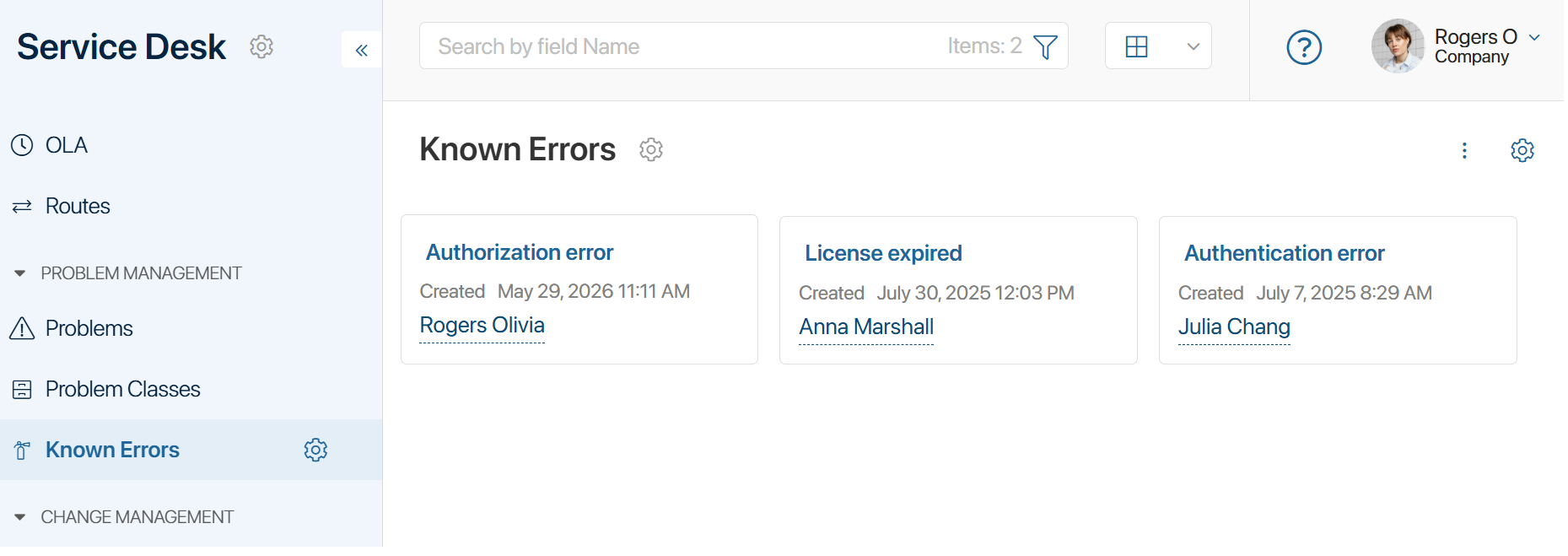
A page containing the error and a detailed description of its resolution is created by the responsible employee while resolving the problem.
The following statuses are available for items in the Known Errors app:
- Relevant. The status is assigned when the error is created. The data is available when searching for ready-made solutions to fulfill a request or close a problem.
- Irrelevant. The responsible employee assigns this status on the error page. Information about the error can be viewed but cannot be used when resolving a request or problem.
To track statuses, it is convenient to display items on the app page as a Kanban board.
Add a known error
The responsible employee adds information about the error resolution while resolving the problem. To do this, they fill in the following fields:
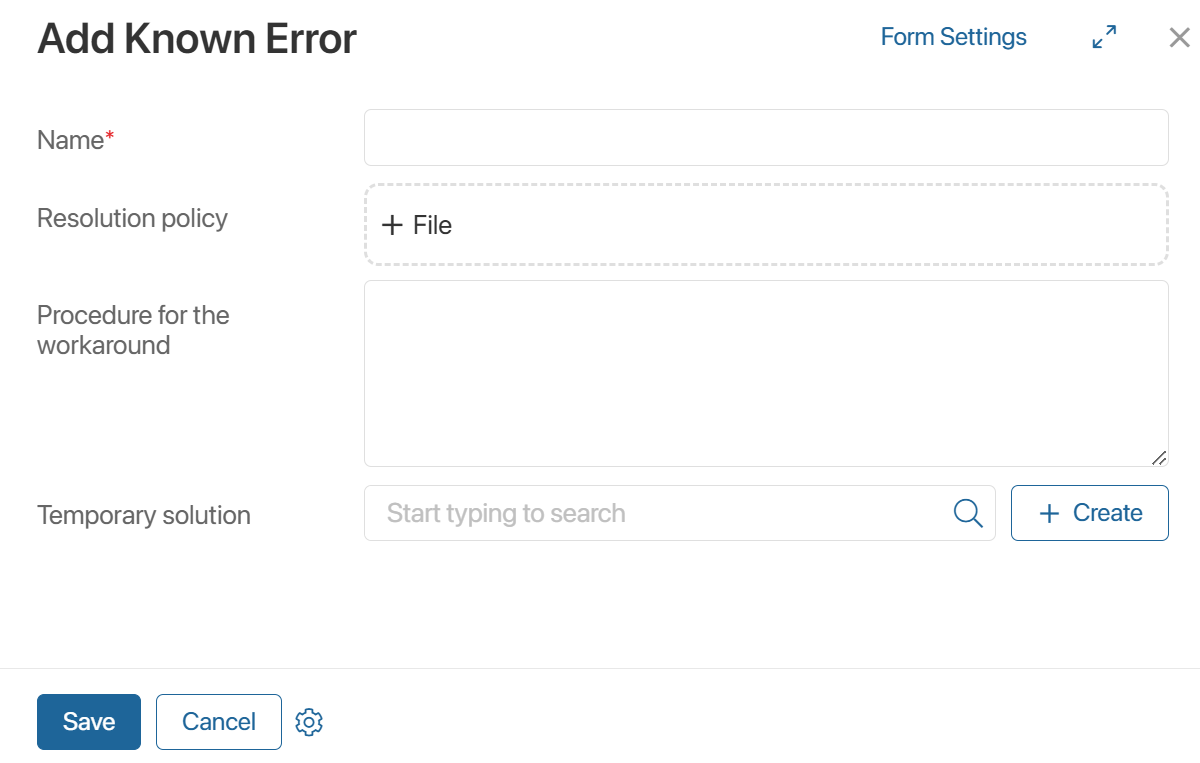
- Name*. The name of the known error.
- Resolution policy. A file containing information on resolving similar errors.
- Procedure for the workaround. Steps to prevent the error from occurring.
- Temporary solution. Used until a permanent solution is found. Available temporary solutions are stored in the Resolutions app.
After saving, the information about the new error and its resolution will appear on the app page with the Relevant status.
Work with an error
Clicking on an app item opens the problem page, where users can:
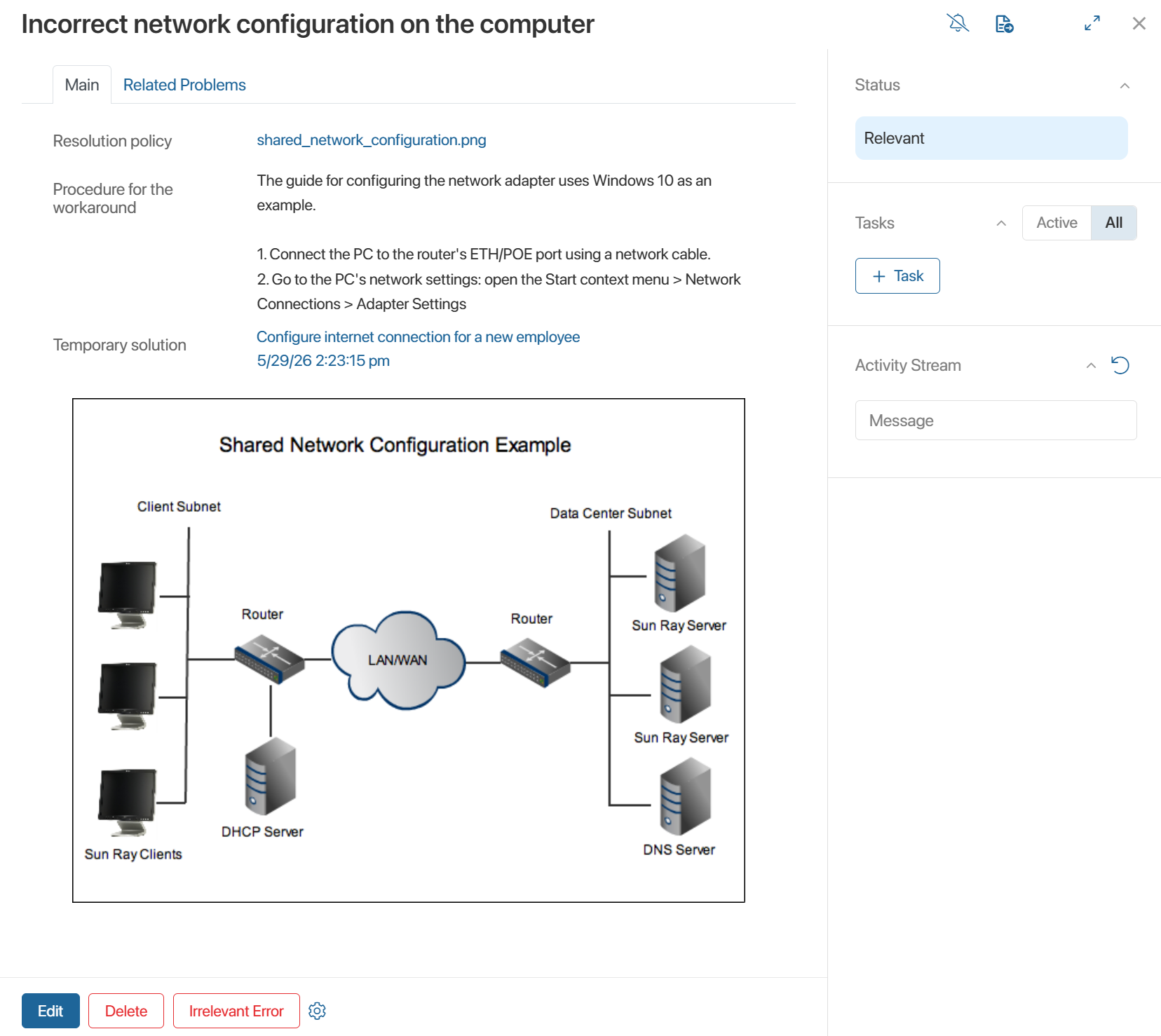
- Create a task and correspond regarding the error.
- Send error for information or approval using the
 button.
 - View the list of problems for which responsible employees specified this error during resolution.
- Mark the error as inactive so that operators cannot use the information to resolve a request or problem.
- Edit the error information or delete it.