Sometimes duplicate requests appear in the system. For example, different operators may register requests from the same applicant for the same issue.
When a request is created, the the system automatically checks for similar open requests based on the Service and Applicant fields. If both field values match, a button for linking duplicate requests appears on the request pages.
Use this button to identify duplicate requests, select the parent request, and link the duplicates to it. Once linked, the resolution from the parent request is retained in the duplicate requests, so they do not need to be processed separately.
After the requests are bound, the Links tab appears on their pages. On this tab, you can view linked requests or remove the link if a request was marked as a duplicate by mistake.
Select a parent request and bind duplicates
- Open a request page. If duplicate requests were found when the request was created—that is, requests with the same Service and Applicant values—the
 button appears on the top toolbar. Click it to open the list of similar requests. The list includes the current request and all detected duplicates.
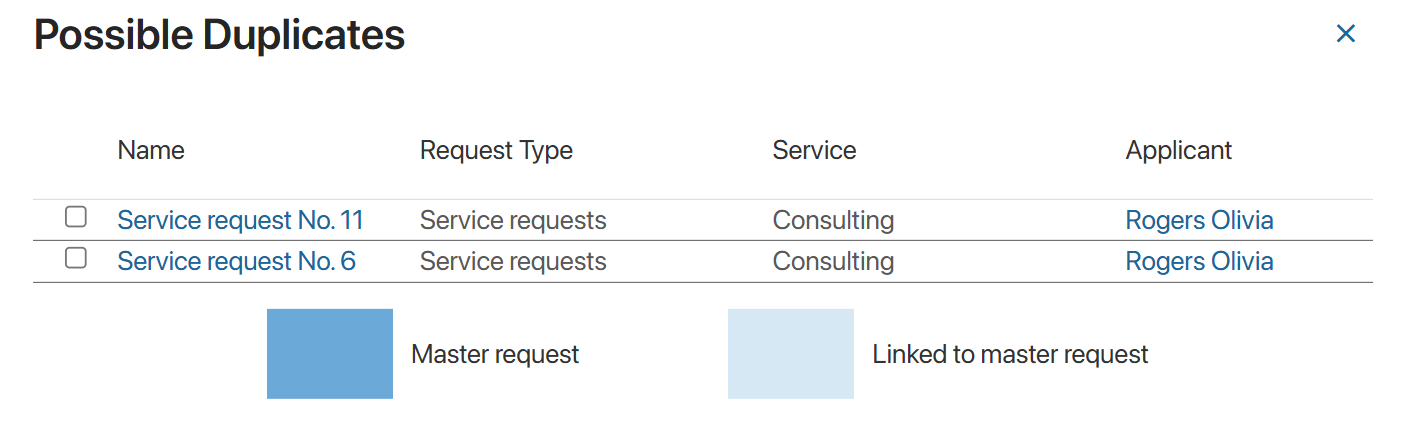
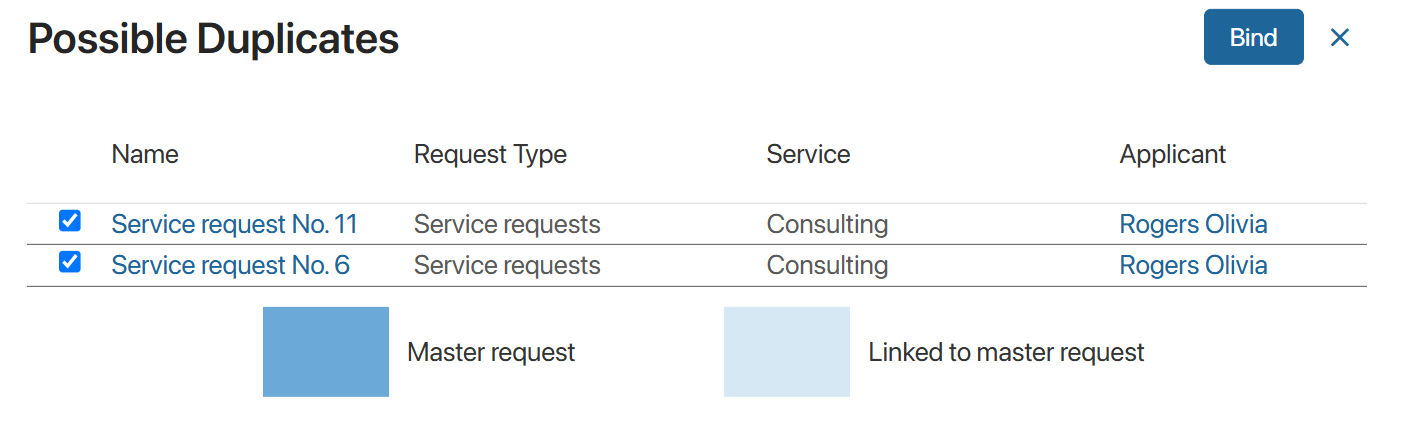
- Select the duplicate requests you want to link. Choose at least two requests, then click the Bind button that appears.
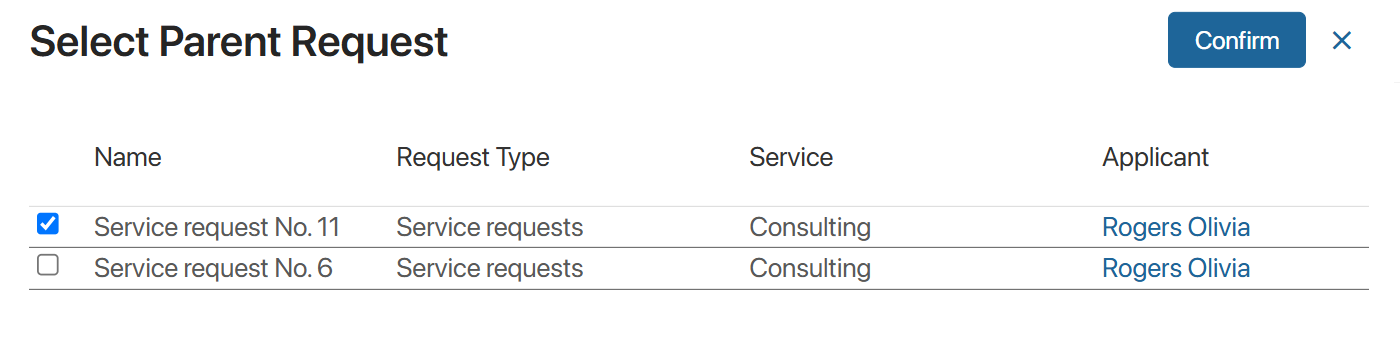
- In the dialog box, select a parent request that has the status Accepted or In progress. Click Confirm.
The parent request is linked to the selected duplicates, and the updated list is displayed. Requests are highlighted with different colors:
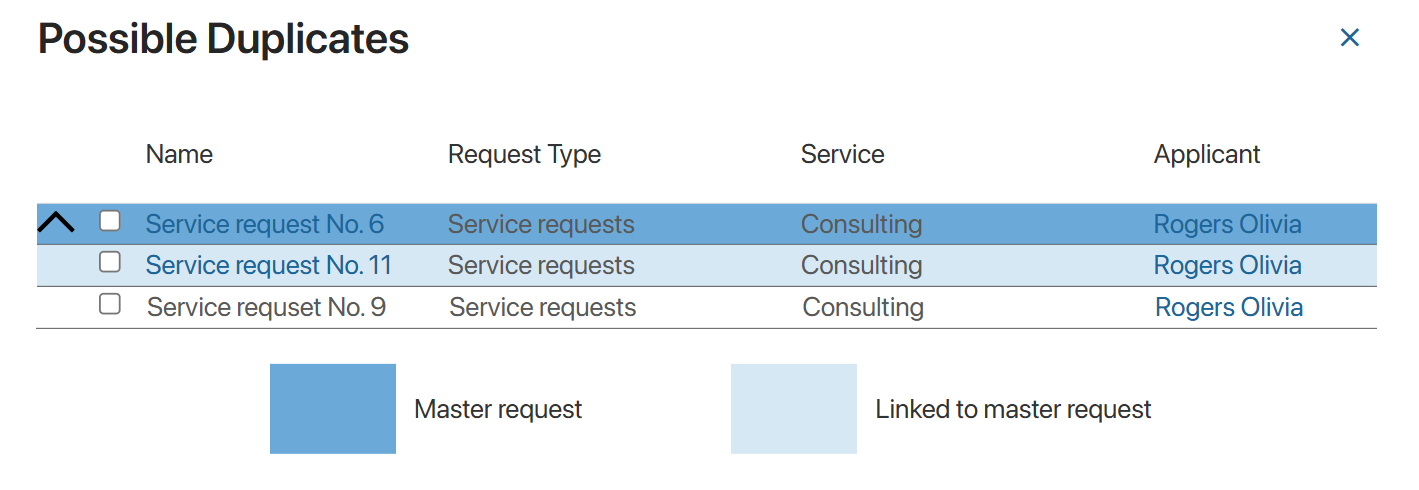
- Blue for the parent request you selected.
- Light blue for the duplicate requests linked to the parent request.
- White for the unlinked duplicate requests, that is, requests with the same Applicant and Service values as the current group of linked duplicates.
You can repeat these steps if:
- There are still requests highlighted in white that you want to add to the current group of linked duplicates.
- You selected the wrong parent request when linking duplicates.
In this case, all existing links will be replaced with the new ones.