BRIX supports file versioning. You can track the change history, restore previous versions, and edit files without risking the loss of the original text.
Version statuses
Each file version has one of the following statuses:
- Current. The latest version that all users see when they open the file.
- Draft. A version saved for further editing. Changes are saved to the same draft without creating a new version. Once the draft is ready, you can make it the current version.
- Outdated. A previous version that has been replaced by a new one. A version becomes outdated when you edit the current version or add a new version.
- Deleted. A version moved to the recycle bin. You can restore it or permanently delete it.
Each version has its own number, which remains unchanged regardless of its status.
Version management features
You can:
- Add new versions: upload files from your computer to replace the current version.
- Create drafts: upload files from your computer as a draft of a new file or a new version of an existing file. You can edit the draft in the system and then make it the current version. For more information, see Drafts of files and file versions.
- Compare versions: visually compare changes between any two versions of a file in .doc or .docx format. This requires integration with a file viewing and editing service.
- Restore previous versions: make an outdated version the current version if unwanted changes have been made to the file.
- Edit outdated versions: move an outdated version to the list of drafts so you can edit it without creating a new version. The version number remains unchanged.
Add a new file version
- Open the file in view mode and click the plus icon on the top panel. If you removed this action from the list of favorite functions in the button control settings, click the three-dot menu and select Add Version.
- In the window that opens, select the file to upload and enter a comment.
By default, the new version becomes the current version. To save it as a draft, turn off the Set the new version as the current one option. - Upload the file.
List of versions and available actions
The sidebar of the file view page displays information about the open version.
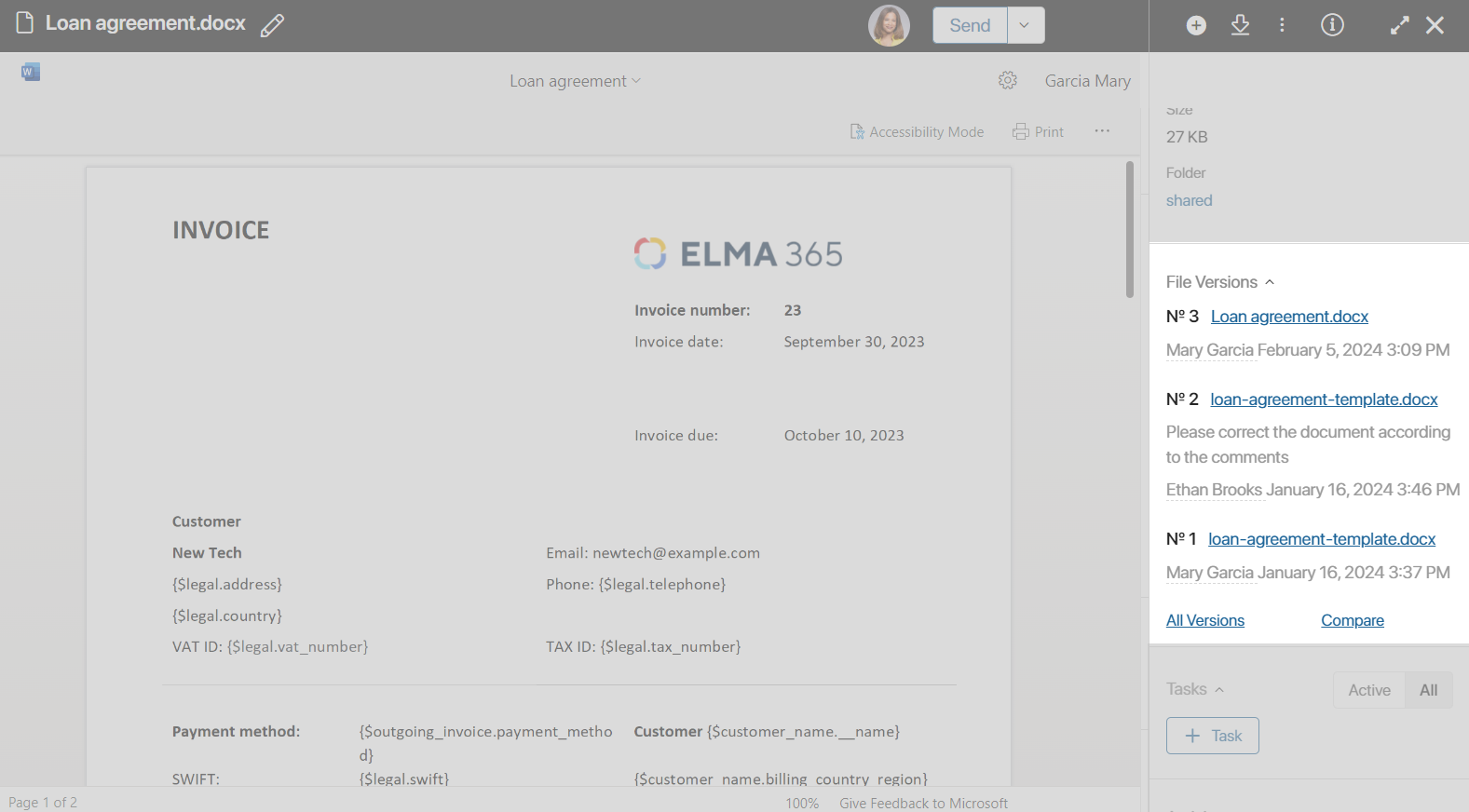
To view the full list of versions, click All Versions in the sidebar. In the window that opens, versions are grouped into the following tabs: All, Current, Outdated, Drafts, and Deleted.
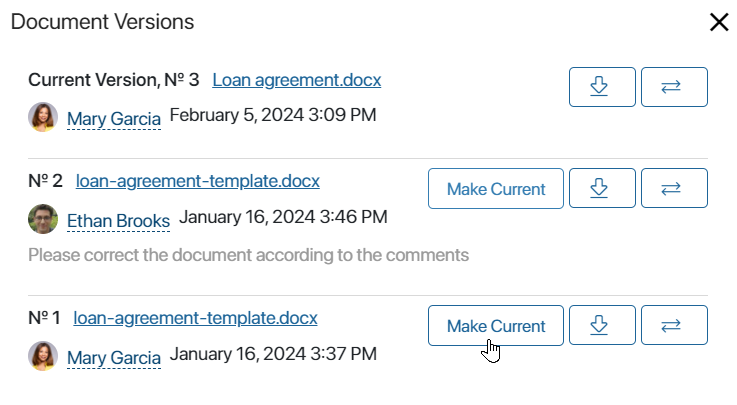
- Open any version in view mode by clicking its name.
- Download a version to your computer by clicking the
 icon next to it.
- Print a version by clicking the
 icon.
- Delete an outdated version or a draft by clicking the trash icon. The version moves to the Deleted tab, and its number remains unchanged.
- Make an outdated version or a draft current by clicking Make Current. The version moves to the Current tab, and its number remains unchanged.
- Compare versions. This option is available for .doc and .docx files.
- Move an outdated version to the list of drafts so you can edit it without creating a new version. The version number remains unchanged.
On the Deleted tab, you can:
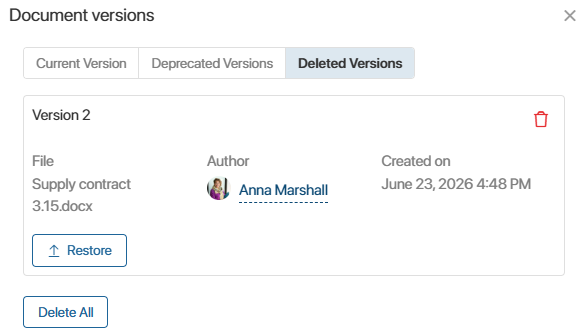
- Restore a version to the deprecated list by clicking the Restore button. This will allow you to download it to your computer, compare it with other versions, etc.
- Permanently delete a version by clicking the trash can icon next to it.
- Permanently delete all versions in the tab by clicking Delete All at the bottom of the window.
View a file version
You can view the contents of a file version by opening it in view mode.
To do this, click All Versions in the sidebar of the file view page and select the required version in the window that opens.
Note that you cannot view a version on the Deleted tab. To view its contents, restore it first.
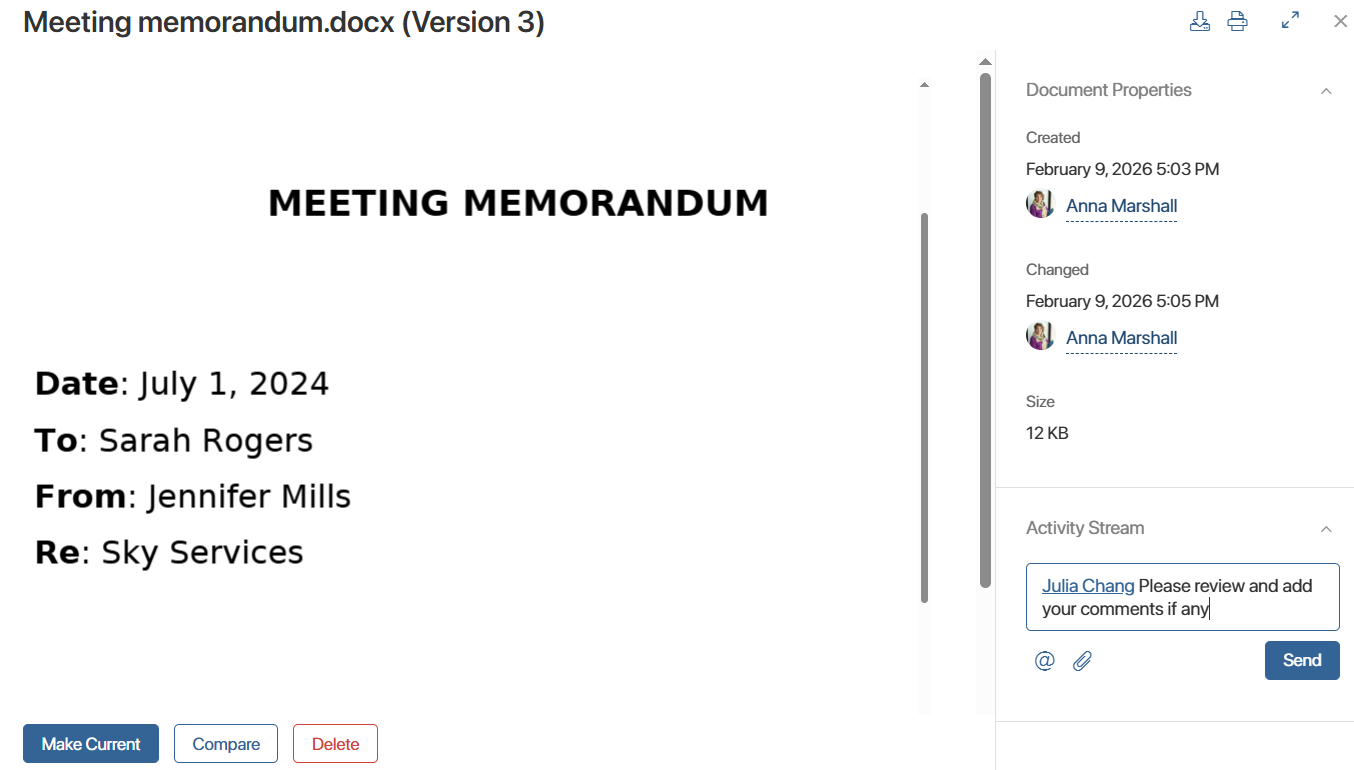
Using the buttons on the bottom panel of the version view form, you can:
- Edit the current or outdated version, or a draft. To edit versions in the system interface, the system administrator must configure integration with a file viewing or editing service.
- Make an outdated version or a draft the current version.
- Compare any versions except deleted ones. This option is available for .doc and .docx files.
- Move a version to the list of deleted versions.
Using the icons in the upper-right corner of the version view, you can download the file to your computer, print it, or copy the link to the view page to the clipboard.
Only users with permission to view the file can open the version page using the link.
The sidebar displays the version's associated activity stream. You can chat, share files, mention users, react to messages, and add messages to Favorites.
Messages appear only in the view mode of the version you opened. They are not added to the file's activity stream.
Compare file versions
You can compare versions of files in .doc and .docx formats. The procedure depends on which versions you want to compare:
- Compare the current version to the previous one or to a file uploaded from your computer.
In the sidebar of the preview page, click the Compare link and select the With File or With Version option.
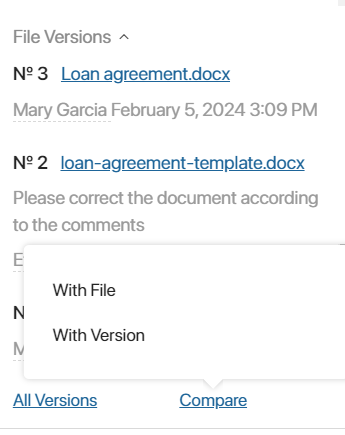
Upload a file of the same format from your computer or select one of the previous versions from the list and click Compare.
- Compare any two versions.
In the preview sidebar, click the All Versions link. On the All, Current, Outdated, or Drafts tab, click the Compare button next to the file name and select the version you want to compare it to. You can only compare versions of the same format.
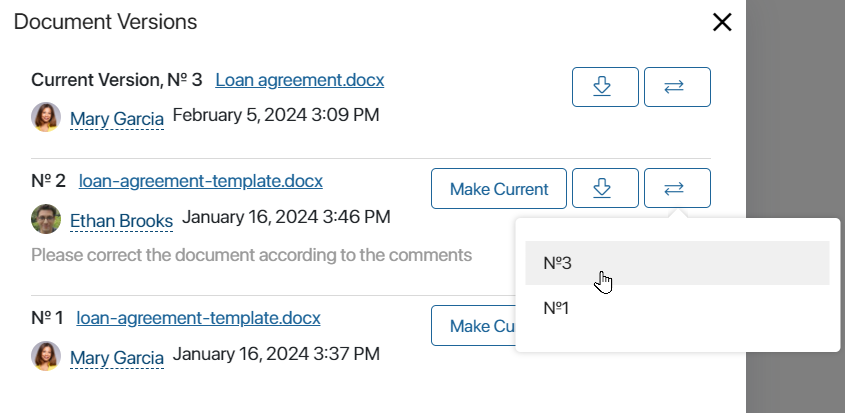
The comparison result will be displayed in a separate window. The changes made will be highlighted. To see detailed information, click on the different text fragments.
If integration with a file viewing or editing service is configured, you can edit the comparison result and then create a new version by clicking Add Version.
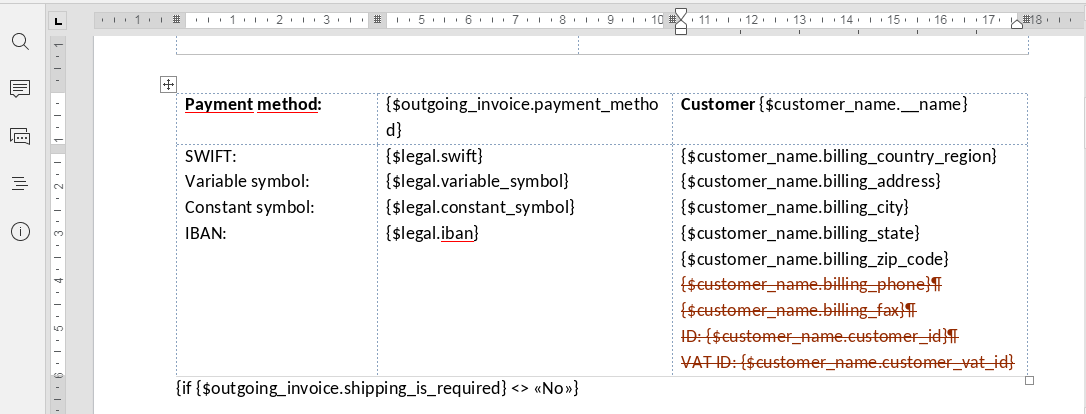
The modified file will become the current version and will be displayed in the general version list.